
Precision gas and liquid analyzers for the trace concentration range. Made in Garmisch-Partenkirchen, Germany.
Unterfeldstraße 12 · 82467 Garmisch-Partenkirchen · Germany
info@aero-laser.de
How the drone-mounted MiCRO NOx detects nitrogen dioxide by luminol chemiluminescence, what is inside the flight unit, and how the ground control unit calibrates it in the field.
The MiCRO NOx measurement system consists of a monitoring unit for drones and a ground control unit for calibration, maintenance and file processing. The method of choice is chemiluminescence, which detects NO2 with high sensitivity down to 1 ppb. NO can be measured with a CrO3 converter (not supplied). An optimised luminol solution suppresses the cross-sensitivity to SO2; with a different luminol solution and a special scrubber, the instrument can also measure SO2.
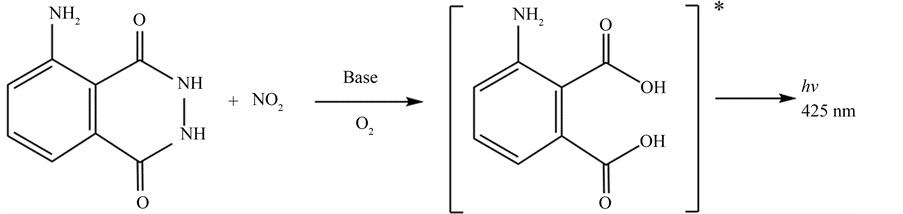
The photon released by the reaction (425 nm) is detected by a photomultiplier. Each measurement includes a precise GPS mark, a timestamp and the ambient temperature, humidity and pressure.
The flight module weighs less than 2 kg. This is achieved by a specially designed, 3D-printed housing made of polyamide 12 (PA 12), which offers good stability, chemical resistance and low weight. The MiCRO NOx is designed for mobile use on drones, copters, bicycles, cars or by pedestrians, and operates autonomously with a built-in GPS module and meteorological sensors.
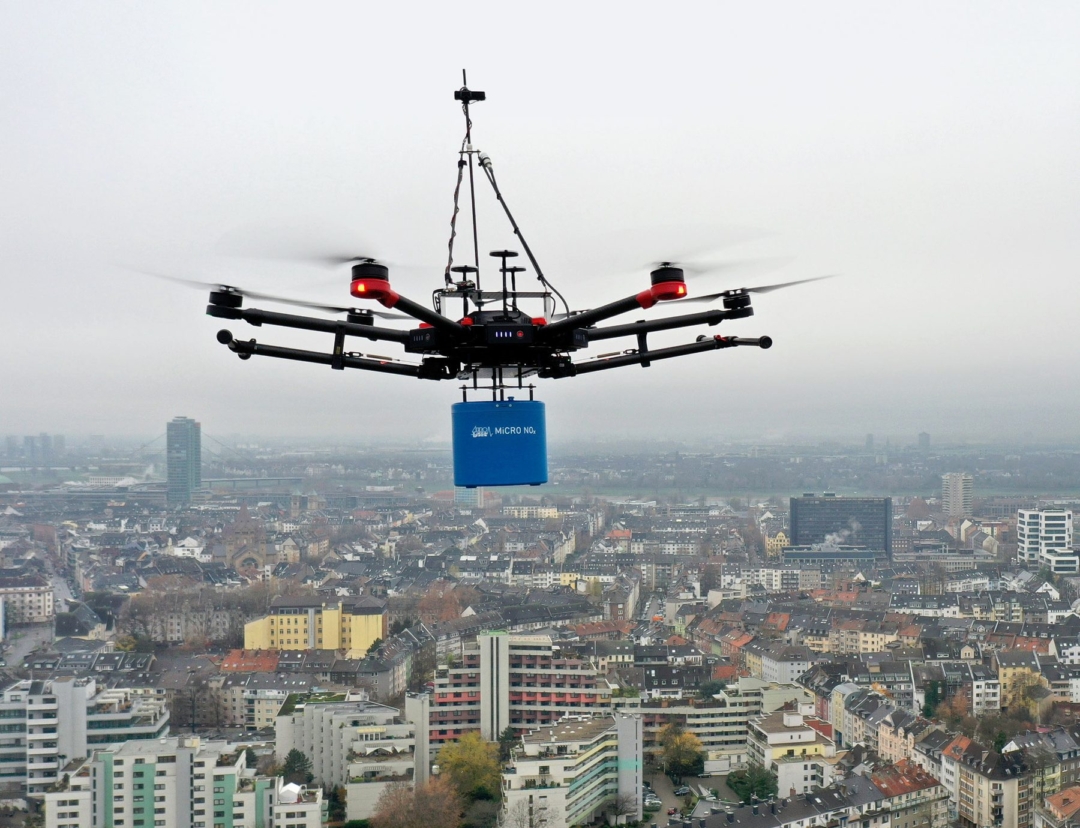
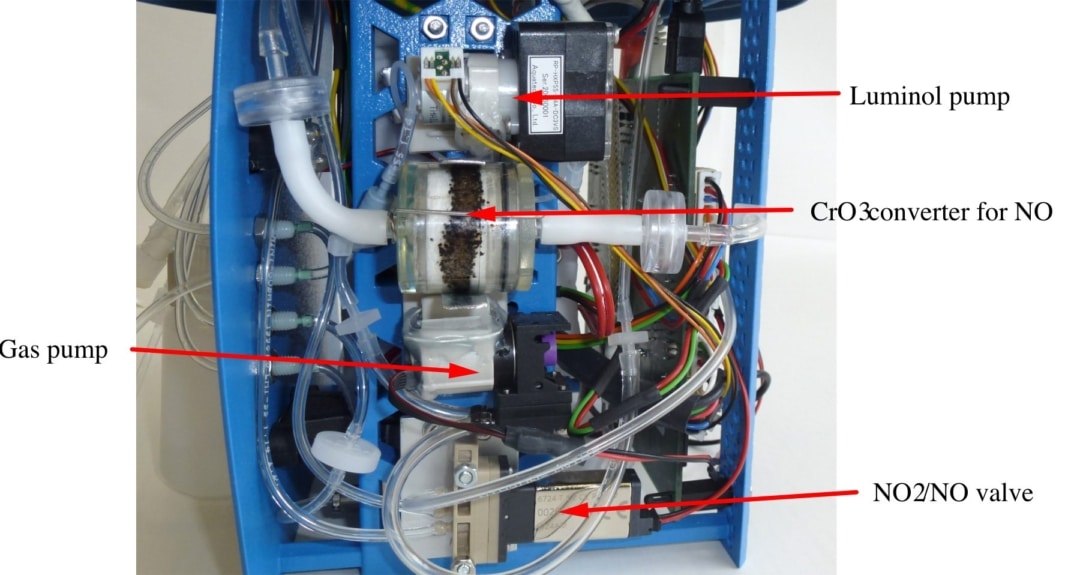

Luminol consumption is approx. 100 µL/min (6 mL per hour).
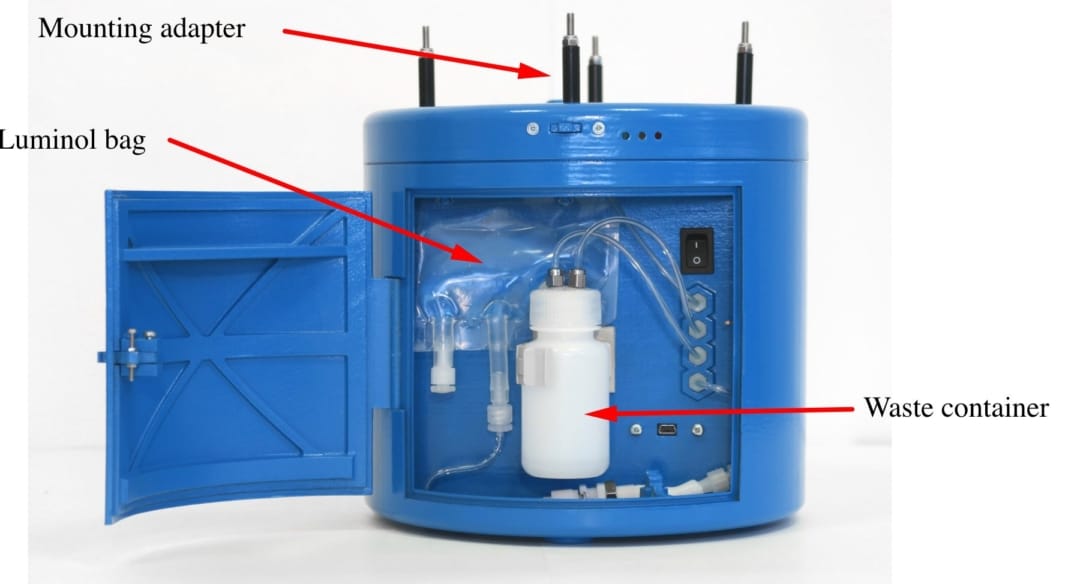
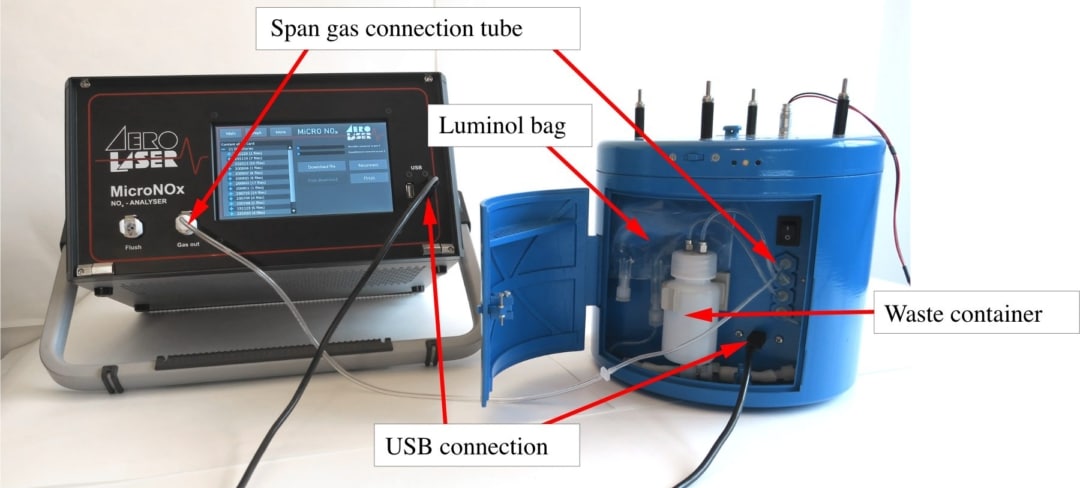
The portable ground control unit is used for calibration, maintenance and data transfer in the field. It is operated via a 7″ touch panel; the pre-installed software allows easy calibration of the flight module and data transfer via USB.
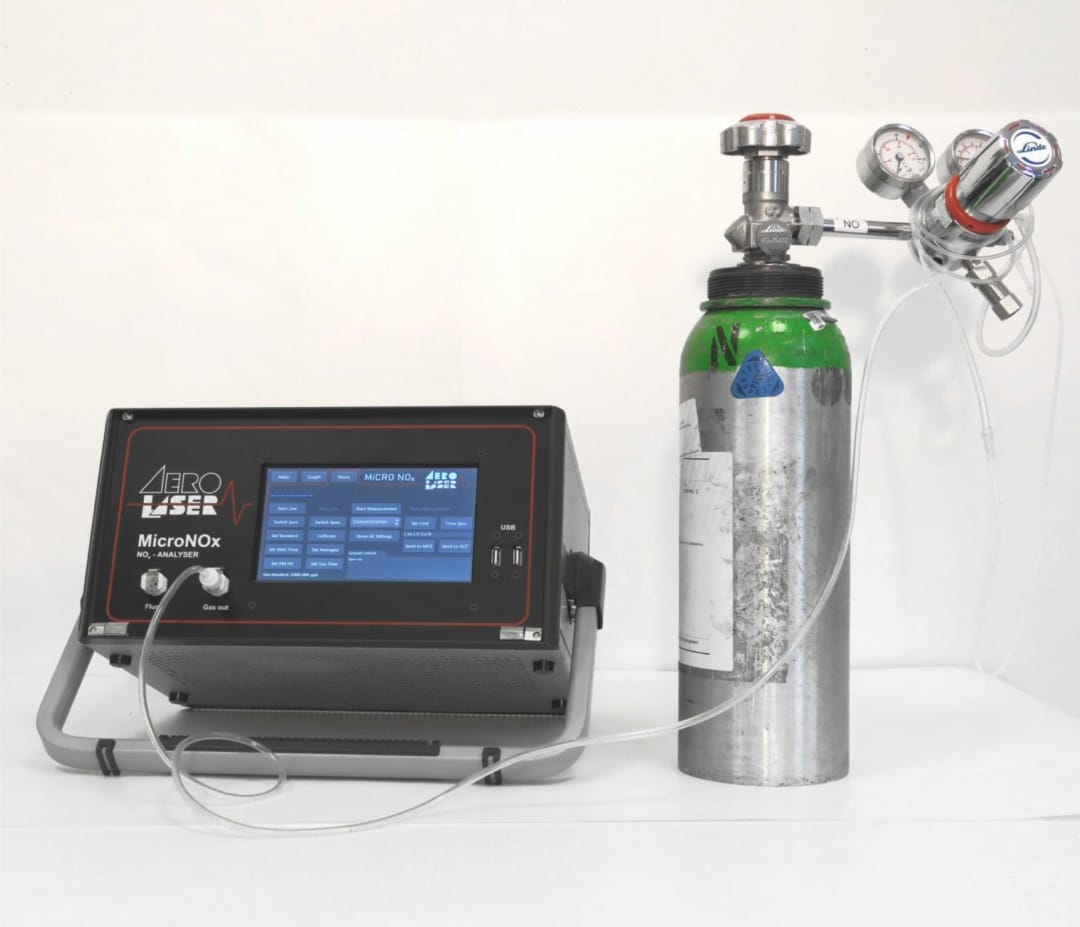
In the calibration set-up, flight unit and ground control unit are connected via the span gas connection tube and USB (see below).
| Parameter | Value |
|---|---|
| Detection technique | Liquid chemiluminescence, luminol reaction |
| Detection limit | approx. 1 ppb |
| Linear range | < 2 – 500 ppb NO2 |
| Time resolution | 0.2 s (up to 5 Hz) |
| Reagent consumption | approx. 100 µL/min |
| Weight | Flight unit < 2 kg (Ø 21 cm, height 20 cm); ground control 5 kg (35 × 20 × 30 cm) |
| Power | 12 – 24 V DC, max. 700 mA |
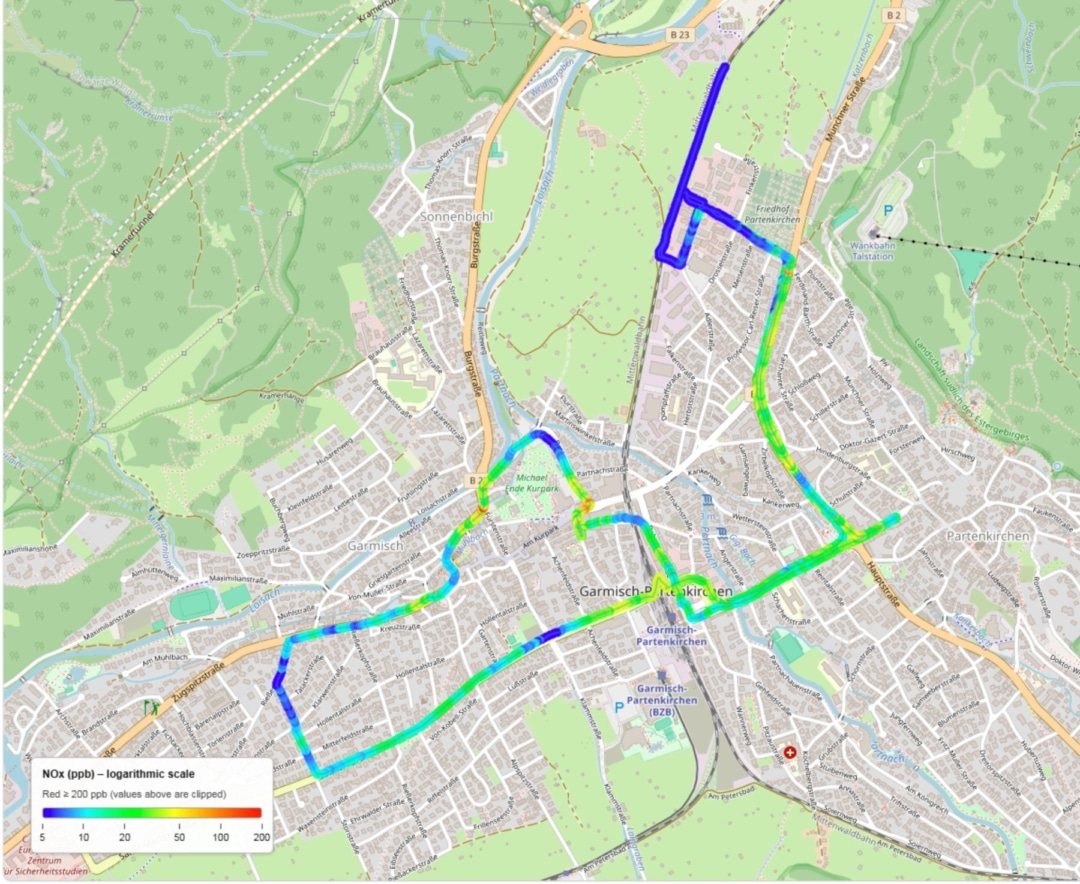
Its mobility allows studies of urban air quality, offering insight into pollution hotspots and the effectiveness of mitigation strategies in real time.
Speak directly to the engineer responsible for this instrument — no sales detours.
Precision gas and liquid analyzers for the trace concentration range. Made in Garmisch-Partenkirchen, Germany.